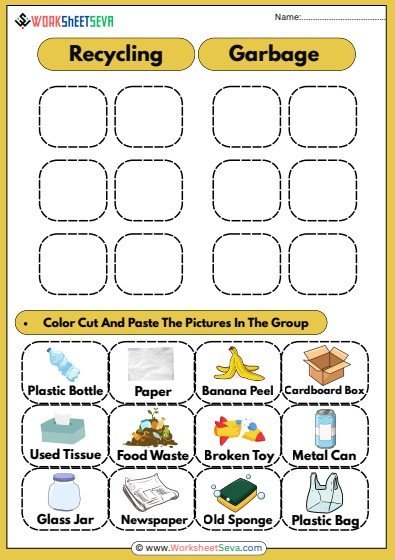
This worksheet is specially designed for young learners to understand the difference between recyclable and non-recyclable waste, helping them build awareness about protecting our planet in a playful and creative way.
Through this worksheet, children will color, cut, and paste different items into two main groups — Recycling and Garbage. By doing so, they’ll develop practical knowledge of waste segregation, environmental responsibility, and sustainable habits from an early age.
Whether you’re a teacher, a parent, or a homeschooling educator, this worksheet is a perfect addition to your classroom or home learning plan.
Worksheet Overview
Your uploaded worksheet includes a colorful and interactive activity titled:
“Color, Cut, and Paste the Pictures in the Group: Recycling or Garbage.”
Students are provided with common everyday items such as:
- Plastic Bottle
- Paper
- Banana Peel
- Cardboard Box
- Food Waste
- Used Tissue
- Broken Toy
- Newspaper
- Metal Can
- Plastic Bag
- Glass Jar
- Old Sponge
Children must carefully identify which items belong in the “Recycling” category and which ones go into the “Garbage” category.
This task encourages critical thinking and environmental awareness — all while making learning hands-on and fun!
What Is Recycling?
Recycling is the process of converting waste materials into new products instead of throwing them away.
It helps reduce pollution, save energy, and minimize the amount of waste in landfills.
Common recyclable items include:
- Paper and cardboard
- Plastic bottles and containers
- Metal cans
- Glass jars
By recycling, we give new life to used items and keep our planet clean and green.
What Is Garbage?
Garbage refers to waste that cannot be recycled or reused. It is usually disposed of in landfills.
These items often include food waste, old sponges, used tissues, or broken toys.
Garbage should be properly managed to prevent pollution and unpleasant smells. Teaching kids to identify garbage helps them avoid mixing it with recyclable items.
Answer Key With Explanation
Let’s now look at the correct sorting of the items from the worksheet and understand why they belong in each group.
Recycling Group
- Plastic Bottle – Recyclable; can be turned into new plastic items.
- Paper – Can be recycled to make notebooks, tissue, or packaging.
- Cardboard Box – 100% recyclable; used in paper recycling industries.
- Newspaper – Commonly recycled into new paper products.
- Metal Can – Aluminum or tin cans are recyclable after rinsing.
- Glass Jar – Recyclable and reusable for multiple purposes.
Garbage Group
- Banana Peel – Organic waste; should go into compost, not recycling.
- Food Waste – Belongs in compost or garbage.
- Used Tissue – Contaminated; not recyclable.
- Broken Toy – Often made of mixed materials, hard to recycle.
- Plastic Bag – Though technically recyclable, most local recycling systems don’t accept them.
- Old Sponge – Non-recyclable; should go to garbage.
Why Recycling Education Matters
In today’s world, environmental issues like pollution, deforestation, and global warming are major concerns.
By teaching recycling early, we shape a generation of environmentally responsible citizens who care about the planet.
Recycling education helps students:
- Conserve natural resources
- Reduce waste
- Minimize landfill use
- Save energy
- Promote a cleaner environment
When students learn to sort waste properly, they become eco-champions at home and school!
The recycling sorting activity worksheet is more than just a fun classroom activity—it’s a foundation for a sustainable mindset. Through simple actions like sorting and coloring, children learn that every small step helps protect our Earth.
Encourage your students or children to practice recycling daily, reduce waste, and become little eco-heroes who make the world a cleaner, greener place.