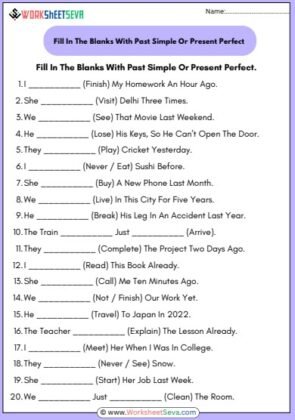
Understanding verb tenses is a key part of learning English. The “Present Simple” and “Present Continuous” tenses are usually the first ones students learn because they are used in daily conversation. However, it is common for students to get confused about which one to use.
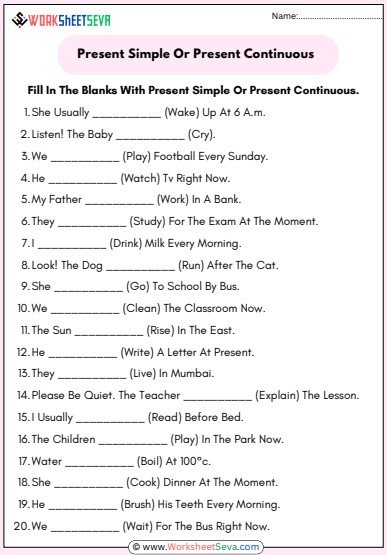
This worksheet is designed to help students understand the difference using simple, real-life sentences. It focuses on distinguishing between things we do every day (routines) and things we are doing right now.
What Are Verb Tenses?
Verb tenses tell us when an action happens. They let us know if an action is happening now, happens regularly, happened in the past, or will happen in the future.
1. Present Simple Tense
When to use it: We use the Present Simple tense to talk about:
- Daily Routines: Things you do every day or week.
- Habits: Things you do regularly.
- General Facts: Things that are always true.
The Rule: Use the base form of the verb. If the subject is He, She, or It, add “s” or “es” to the verb.
- Structure: Subject + Base Verb (+ s/es)
Examples:
- She usually wakes up at 6 a.m. (Routine)
- I drink milk every morning. (Habit)
- The sun rises in the east. (General Fact)
- They live in Mumbai. (Permanent situation)
2. Present Continuous Tense
When to use it: We use the Present Continuous tense to talk about:
- Actions happening right now: Things happening at the exact moment you are speaking.
- Temporary actions: Things that are not permanent.
The Rule: Use the helping verb (is, am, are) and add “ing” to the main verb.
- Structure: Subject + is/am/are + Verb-ing
Examples:
- The baby is crying. (Happening now)
- He is watching TV right now. (Happening now)
- She is cooking dinner. (Action in progress)
- We are waiting for the bus. (Temporary)
How to Tell the Difference (Clue Words)
- Present Simple clues: Words like always, usually, every day, often, never.
- Present Continuous clues: Words like now, right now, at the moment, Look!, Listen!