Understanding verb tenses is a key part of learning English. The “Past Simple” and “Present Perfect” tenses are often the most confusing because they both talk about the past. However, they are used in different situations.
This worksheet helps students understand the difference using simple, everyday examples like finishing homework, losing keys, or traveling.
What Are Verb Tenses?
Verb tenses tell us when an action happens. They help us understand if an action happened at a specific time in the past or if it happened in the past but still matters today.
1. Past Simple Tense
When to use it: Use the Past Simple tense for actions that are completely finished and happened at a specific time.
- The Rule: You know exactly when it happened.
- Structure: Subject + Verb (past form)
Examples:
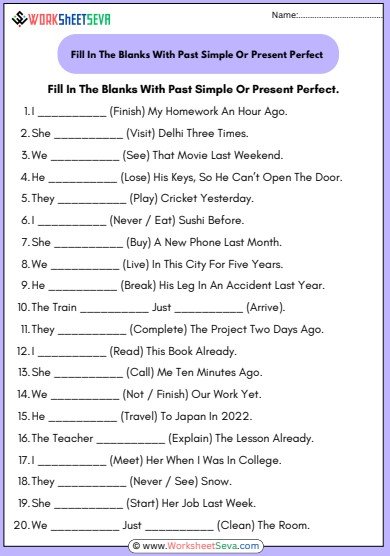
- I finished my homework an hour ago.
- She bought a new phone last month.
- They played cricket yesterday.
Key Time Words: Look for words that define a specific time, such as yesterday, last week, last year, or ago.
2. Present Perfect Tense
When to use it: Use the Present Perfect tense for actions that happened in the past but are connected to the present. The exact time is usually not mentioned or not important.
- The Rule: The result is important now, or it is a life experience.
- Structure: Subject + has/have + Past Participle
Examples:
- She has visited Delhi three times. (Life experience)
- He has lost his keys. (Result: He doesn’t have them now)
- The train has just arrived. (Recent action)
Key Time Words: Look for words like already, yet, just, ever, never, for, and since.
Summary of the Difference
- If you say when it happened (yesterday), use Past Simple.
- If the time is not mentioned or the action has a result now, use Present Perfect.