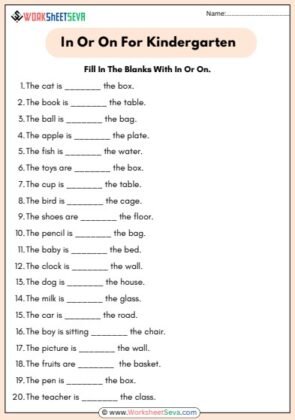
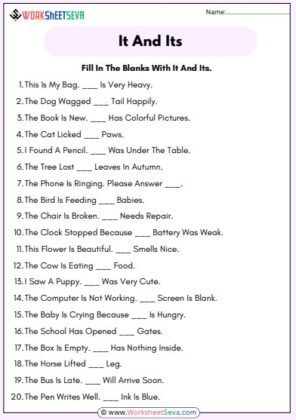
Learning English Grammar Becomes More Effective When Students Practice With Real Examples. One Of The Most Common Areas That Learners Find Confusing Is The Use Of “Each” And “Every.” This Fill In The Blanks With Each And Every Worksheet Helps Students Strengthen Their Understanding Of These Two Important Determiners Through Fun, Simple, And Meaningful Sentences.
If You Are A Teacher Looking For English Grammar Worksheets For Beginners, Or A Parent Helping Your Child Improve Their Writing, This Printable Pdf Is Perfect For You. Let’s Explore How This Worksheet Can Help Learners Easily Master The Difference Between Each And Every.
What Are “Each” and “Every”?
Before attempting the worksheet, let’s understand what these words mean and how they are used.
✅ Each
- Refers to individual members of a group separately.
- Used when we emphasize one by one.
Example: Each student has a notebook.
✅ Every
- Refers to all the members of a group considered together.
- Used when we talk about all as a whole group.
Example: Every student in the class is hardworking.
👉 In short:
- Each = focuses on individuals.
- Every = focuses on the group collectively.
Answer Key with Explanation
Let’s go through the answers one by one and explain why each answer is correct.
- Each student in the class has a notebook.
👉 Refers to students individually. - Every Sunday.
👉 Refers to all Sundays as a routine. - Each of the boys was given a medal.
👉 Focus on individuals receiving medals. - Every weekend.
👉 Routine activity repeated for all weekends. - Each page of this book is interesting.
👉 Each page individually has interesting content. - Each child a piece of chocolate.
👉 Distributed one by one. - Each answer carefully.
👉 Checked answers individually. - Every morning, I go for a walk.
👉 Habitual activity done daily. - Every question must be answered.
👉 All questions together, none left out. - Every day except Monday.
👉 Routine schedule. - Each of the girls received a certificate.
👉 Focus on individuals again. - Every day.
👉 Repeated activity, showing routine. - Each student got a different topic to present.
👉 Individual assignment for each student. - Every festival with great joy.
👉 All festivals celebrated collectively. - Each of the players shook hands after the match.
👉 One-by-one action. - Each classroom has a smart board now.
👉 Every individual classroom has one. - Every day.
👉 Daily habit or routine. - Each station for two minutes.
👉 The bus stops one by one at stations. - Each of them agreed with the decision.
👉 Every individual agreed separately. - Each group.
👉 Homework given to every group individually.
Grammar Tips for “Each” and “Every”
When to Use Each
- Use with singular nouns (e.g., each student, each book).
- Often used with “of” + plural noun (e.g., each of the boys).
- Focuses on individuals in a group.
Examples:
- Each pen costs ₹10.
- She gave a gift to each child.
When to Use Every
- Use with singular nouns (e.g., every morning, every day).
- Refers to all members of a group collectively.
- Commonly used to describe time or frequency.
Examples:
- He goes to school every day.
- Every student must submit the form.
The “Fill In The Blanks With Each And Every Worksheet” is a perfect resource to understand and practice determiners. Whether you’re a student, teacher, or English enthusiast, this worksheet simplifies tricky grammar rules with easy examples and fun sentences.
Regular practice with such exercises ensures your writing becomes fluent, accurate, and natural. Remember — each and every may look similar, but knowing the difference helps you express yourself clearly and correctly.